

Solutional Blog
Why GPU Clouds Are Not Just Smaller Public Clouds
Neoclouds aren’t simply smaller versions of public clouds. They’re specialized AI infrastructure providers built around GPU performance, availability, and utilization. Their economics and infrastructure priorities demand a fundamentally different operating model.
NVIDIA, Hugging Face, and the Growing Importance of Open-Weight AI
NVIDIA’s move to acquire Hugging Face signals a major bet on the growing importance of open-weight AI models. In this post we look at what it could mean for model access, the broader AI ecosystem, and the continued role of closed frontier models.
The AI Network Is Part of the Product
AI data centers are changing the economics of networking, turning the network from a traditional cost center into infrastructure directly tied to revenue. For neoclouds, faster network provisioning and operations mean higher GPU utilization, faster customer onboarding, and ultimately faster time-to-revenue.
What Neocloud Providers Actually Need from Infrastructure Vendors
Neocloud providers aren’t simply buying GPUs. They’re building AI platforms where networking, automation, power, observability, and operations directly determine performance and profitability. Infrastructure vendors that understand these operational realities will be best positioned to succeed in the next phase of AI infrastructure.
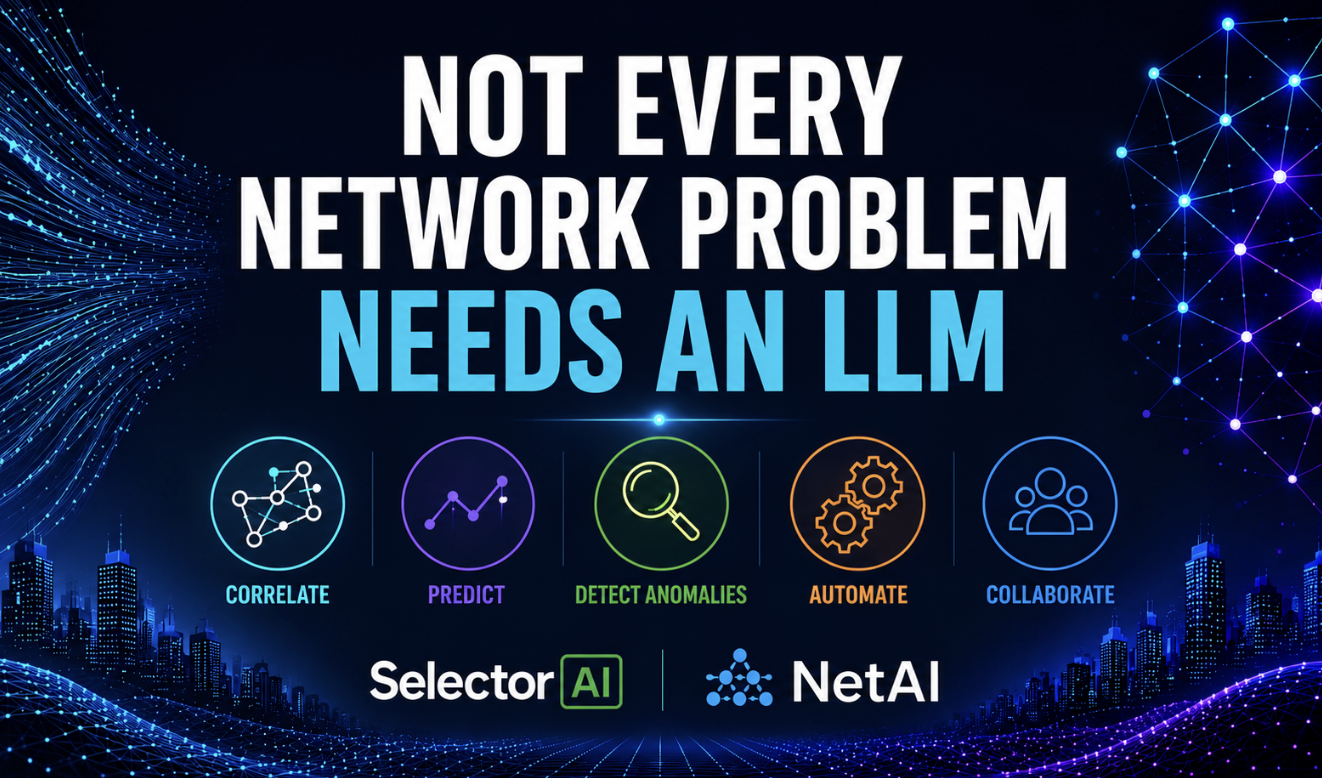
Not Every Network Problem Needs an LLM
AI in NetOps is maturing beyond “just ask an LLM.” At NFD40, Selector and NetAI demonstrated how different AI techniques including machine learning, graph neural networks, and deterministic analysis can be applied to specific operational problems with far greater precision and context.
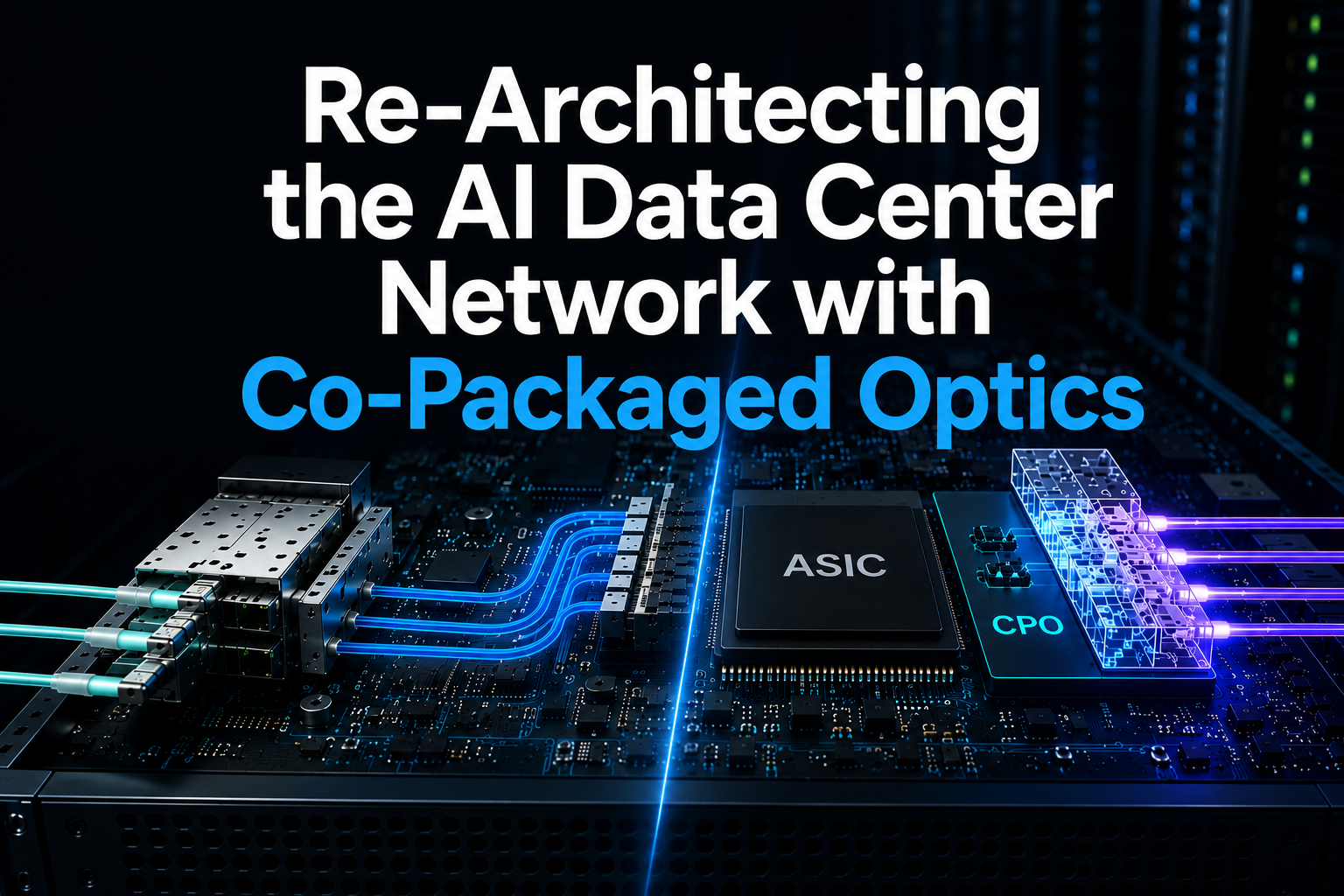
Re-Architecting the AI Data Center Network with Co-Packaged Optics
Co-packaged optics (CPO) is reshaping AI data center networking by moving optical engines closer to the switch ASIC itself. As bandwidth, power, and scaling demands push pluggable optics toward their limits, CPO is a major architectural shift toward tighter integration between compute, switching, and communication in the AI era.
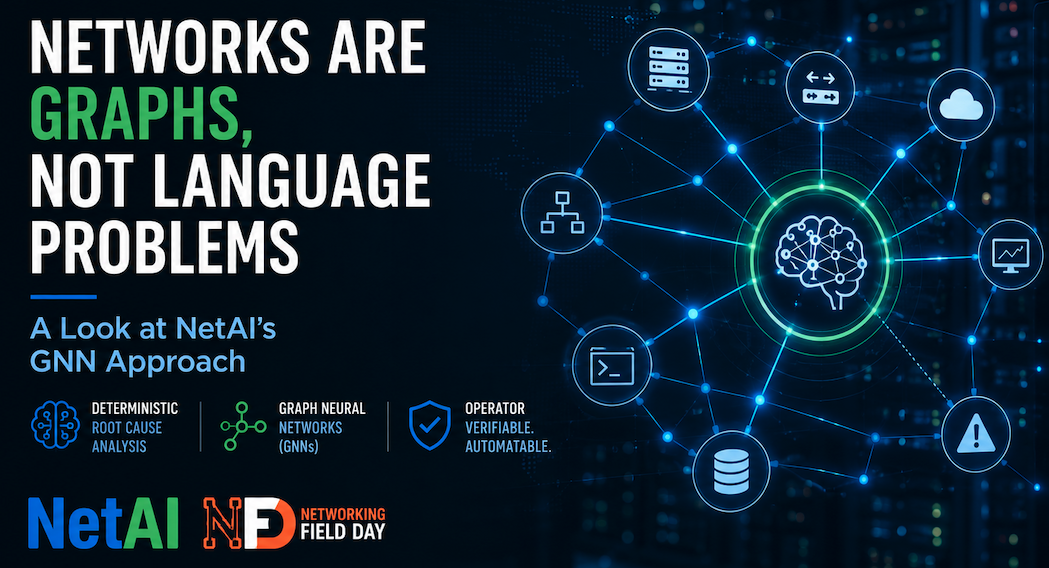
Networks Are Graphs, Not Language Problems: A Look at NetAI’s GNN Approach
Most AI systems in networking treat operations like a language problem. But networks are fundamentally graphs built on relationships, dependencies, and topology. At NFD40, NetAI presented a compelling case for why Graph Neural Networks may be better suited for deterministic root cause analysis and autonomous network operations.
NFD40: Scale-Across, Vendor Gravity, and the Elephant out of the Room
At NFD40, Nokia, Cisco, and Arista revealed that AI networking is rapidly evolving beyond traditional scale-out architectures into a new era of “scale-across” infrastructure spanning multiple data centers. Beneath the vendor positioning and optics discussions was a larger reality: AI networking is becoming an operational discipline where network performance directly impacts GPU utilization, job completion time, and business outcomes.
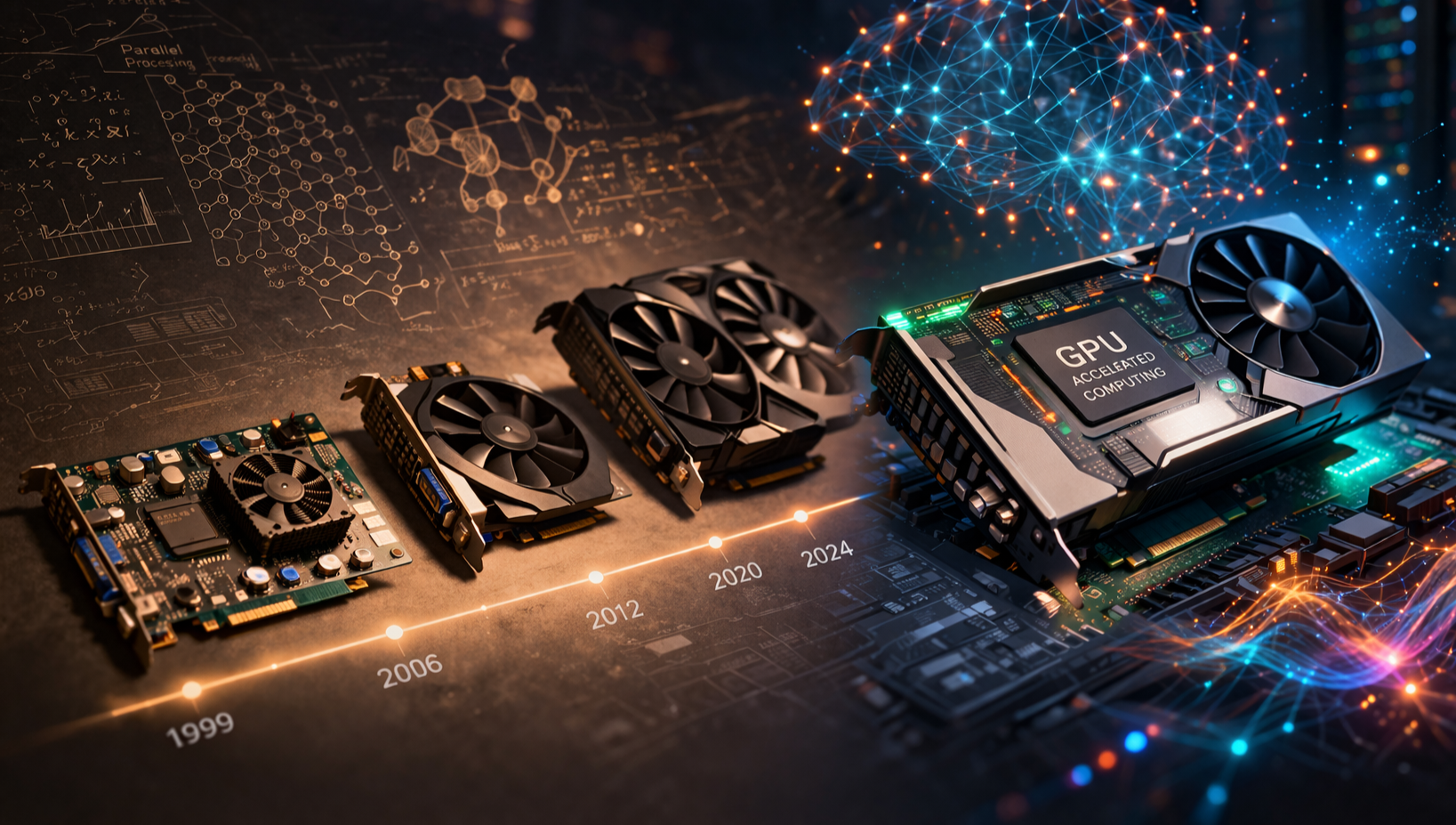
How the GPU Became the Foundation of Modern Artificial Intelligence
What started as a way to render better video games became the engine behind modern artificial intelligence. The GPU’s evolution from graphics accelerator to parallel computing powerhouse reshaped not just computing—but how machines learn, reason, and create.
Practical AI for Real-World Network Operations
Aviz Network Copilot embeds operator-centric AI directly into real NetOps workflows, replacing brittle dashboards with context-aware, explainable intelligence. Built as a private, on-prem GenAI platform, it ingests live operational data and applies hybrid RAG to deliver grounded answers that reduce time-to-understanding in production networks.
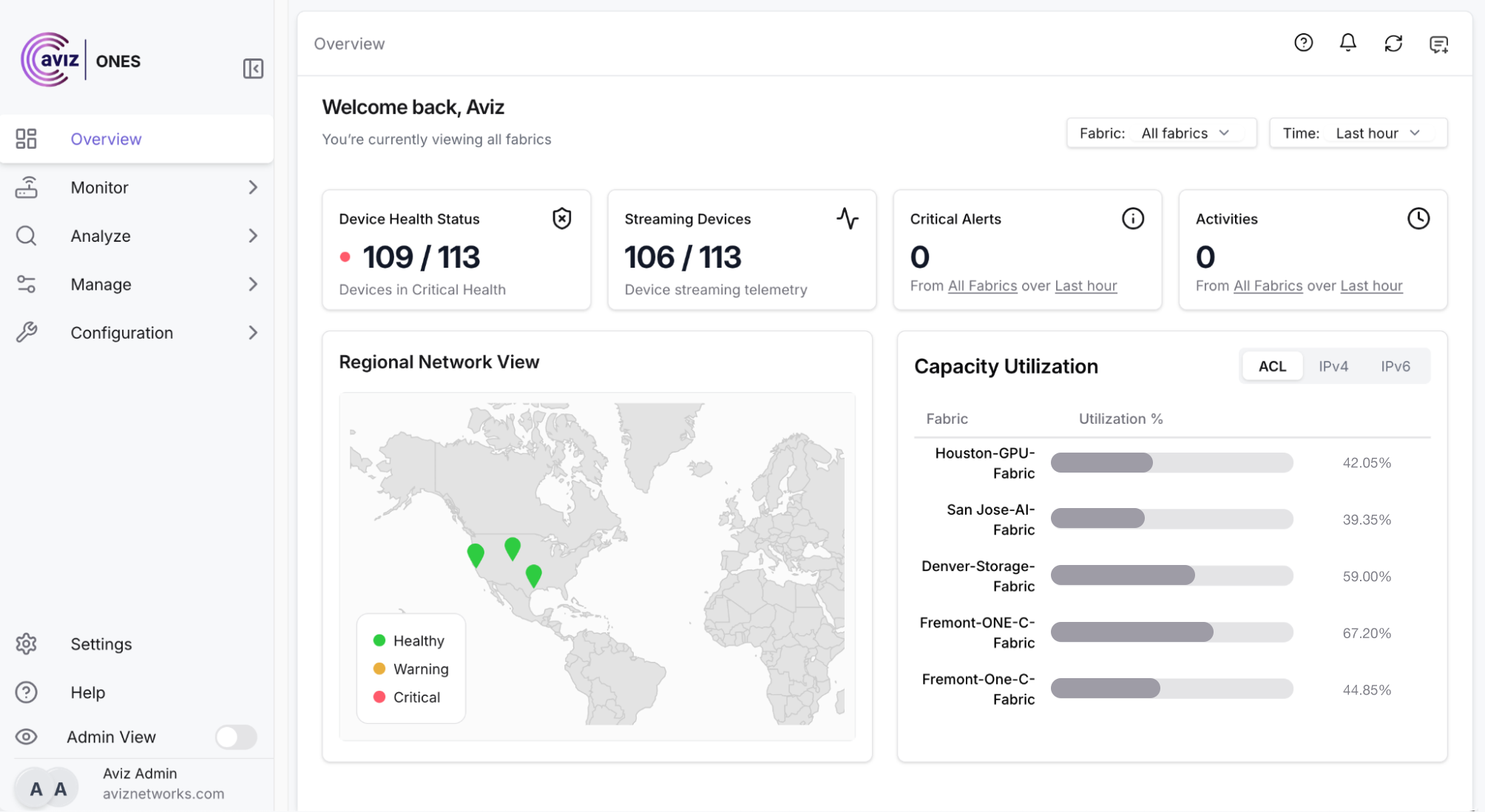
Making SONiC Enterprise-Ready with Aviz ONES
Open networking is moving from theory to practice. SONiC and Aviz Networks’ ONES show how disaggregated, programmable networks can deliver enterprise-grade reliability without vendor lock-in.
Packet-Level Truth Without the Lock-In
Most network teams face a tough choice: pay a premium for proprietary packet brokers or settle for flow-only tools that lack packet-level detail. Aviz Deep Network Observability offers a third option - disaggregated packet intelligence. Built on open-source SONiC and whitebox switches, DNO delivers full packet visibility without vendor lock-in, dramatically lowering costs while scaling with modern data center needs.

Next-Generation Data Center Networking in the Age of AI
AI is reshaping every layer of the data center - networking, power, cooling, and security. In this post, we break down what it takes to build an AI-ready data center, from deterministic network design to AIOps-driven operations and how you can be a part of one of the premier data center-focused events, DCD>Connect | London.

Neocloud Rising
As demand for model training and inference skyrockets, a new paradigm is emerging - Neocloud GPU - powered platforms purpose-built for AI workloads. Unlike general cloud providers, Neocloud vendors like CoreWeave, Lambda Labs, and Crusoe offer high-performance infrastructure, orchestration layers, and managed services tailored to AI.

Redefining App Building with AI at the 2025 AWS Summit NYC
At the 2025 AWS Summit in New York, AWS unveiled AgentCore and S3 Vectors - new tools that mark a shift from AI-assisted coding to full-scale AI-powered system building. This year’s message was clear: AI isn’t replacing people - it’s empowering anyone, regardless of technical background, to build intelligent, modular, real-world applications using simple prompts and a clear idea.

The Age of Ideas
We’re entering the Age of the Idea where imagination, not engineering, is the limiting factor. With generative AI and no-code tools, anyone can turn a concept into a working prototype in hours, not months. The barriers are falling. What will you build?

Three Critical Questions That Guide An AI Initiative
AI is transforming network operations, but success starts with asking the right questions. What specific problem will AI solve better than existing tools? And is your network data ready - clean, connected, and real-time? Without clear answers, AI in NetOps risks becoming a costly experiment rather than a strategic advantage.

Becoming a Next-Gen Network Engineer in a Software-Centric World
As automation, cloud, and AI reshape the networking landscape, the role of the network engineer is evolving fast. Introducing the Next-Gen Network Engineer (NGNE) learning path - a practical roadmap to help engineers build modern skills in automation, DevOps, cloud, and observability. Whether you’re just starting or ready to level up, this guide shows how to embrace disruption and thrive in today’s software-driven world.

Designing a Scalable Data Pipeline for AI in Network Operations
Turning network telemetry into AI-driven insight takes more than intuition - it takes a robust data pipeline. In this article read about the architecture behind real-time AI in NetOps, from telemetry ingestion to model inference, and why data engineering is the foundation of any successful AI initiative.

The Importance of Data Pipelines for AI in Network Operations
AI won’t fix your network if the data feeding it is broken. In this post, learn why building a clean, fast, and reliable data pipeline is the first and most critical step for applying machine learning in network operations.