
Making SONiC Enterprise-Ready with Aviz ONES
Networking has always been the silent engine of digital transformation. It’s the infrastructure that makes cloud computing, AI workloads, and global collaboration possible. Yet for decades, networks have been defined by proprietary operating systems, vendor lock-in, and rigid architectures that slowed innovation. That model is breaking down. A new era is emerging, built on openness and programmability. At the center of this shift is SONiC (Software for Open Networking in the Cloud), an open-source network operating system, and ONES (Open Networking Enterprise Suite), the enterprise-grade management platform from Aviz Networks. Together, they’re redefining what open networking can be.
SONiC: A Foundation for Open Networking
SONiC is not a traditional NOS. It’s an open-source system built on Linux, designed from the ground up to run on a wide variety of hardware. Its defining feature is the Switch Abstraction Interface (SAI), an API layer that standardizes communication between the operating system and the underlying ASIC. This abstraction means SONiC can run on silicon from Broadcom, NVIDIA, Marvell, and others, giving enterprises freedom of choice in hardware without sacrificing functionality.

Technically, SONiC is built around a microservices architecture. Each network function, whether it’s BGP routing, LLDP, or SNMP, runs in its own container. This design provides isolation between services, allowing independent updates and minimizing the risk of cascading failures. If a routing process crashes, it doesn’t take down the entire system. This modularity is critical for resilience and agility.
SONiC supports the advanced features modern networks demand. It offers Layer 3 routing protocols like OSPF and BGP, enabling scalable interconnection across data centers. It supports VXLAN and EVPN overlays, which are essential for building virtualized fabrics in data center and cloud environments. And it includes QoS and ACL frameworks for traffic shaping and security, as well as MLAG for redundancy. SONiC also integrates telemetry streaming, allowing network operators to collect real-time data from ASICs, interfaces, and routing tables. These capabilities make SONiC suitable not just for hyperscale cloud providers but also for enterprises modernizing their data centers and campuses.
Why SONiC Matters
The importance of SONiC lies in its openness. Traditional NOS platforms are tightly coupled to specific hardware, forcing enterprises into vendor lock-in. SONiC breaks this model by offering a vendor-neutral, hardware-agnostic foundation. This openness delivers several transformative benefits.
First, SONiC enables freedom of choice.
Organizations can mix and match hardware from different vendors, confident that SONiC will provide a consistent operational model. Because SONiC works with various hardware vendors on various silicon, freedom of choice has never been more attainable in the network stack.
Second, it reduces capital expenditure.
Whitebox switches running SONiC are significantly cheaper than proprietary alternatives, making enterprise-grade networking accessible at a lower cost. In fact, it makes replacement and upgrades that much easier and cost-effective since the network is no longer tied to a single hardware vendor.
Third, it accelerates innovation velocity.
Because SONiC is open-source, new features are developed rapidly by a global community of contributors, including hyperscalers, enterprises, and vendors. And because hyperscalers have been leading the way until recently, SONiC is full-featured to meet the demands of the most sophisticated networks.
Finally, SONiC brings cloud-scale reliability into enterprise environments.
For most network operators, reliability, stability, and resiliency are paramount when choosing a vendor and designing a network. SONiC’s architecture is proven in hyperscale deployments, meaning enterprises can adopt it with confidence.
Why SONiC Is the Network Operating System of the Future
Every major technological shift begins with disaggregation. Just as Linux freed servers from proprietary UNIX systems and provided a real enterprise-grade alternative to Windows as a server OS, SONiC is freeing networks from vendor lock-in. Its modular, container-based architecture means organizations can innovate faster, automate deeper, and integrate more intelligently.
SONiC is designed for the era of programmable networking, where policies and outcomes take precedence over static configurations. It supports predictive monitoring, AI-driven analytics, and a level of flexibility that makes it ideal for hybrid cloud and edge environments.
SONiC is the network operating system of the future because it embodies the principles of openness and community. It’s built to evolve, not to constrain. It scales effortlessly from small enterprise deployments to hyperscale fabrics. It supports both traditional and cloud-native workloads. And most importantly, it aligns with the way modern IT teams work through automation and continuous integration.
Making SONiC Enterprise-Ready with Aviz Networks
While SONiC provides the foundation, enterprises need more than raw open-source software. They need observability, automation, lifecycle management, and support. This is where Aviz extends SONiC’s capabilities to make it production-ready for enterprise IT and service providers. Aviz includes testing and validation frameworks to ensure stability across hardware platforms, patch management, and security hardening for compliance, and observability for NOC visibility.
And because SONiC makes true disaggregation more feasible than ever before, Aviz also promotes SONiC’s multi-vendor interoperability, allowing customers to mix hardware while maintaining a consistent operational model.
The core of Aviz’s SONiC offering is ONES (Open Networking Enterprise Suite), a management platform that sits above SONiC and provides a single interface for configuration, monitoring, and troubleshooting.
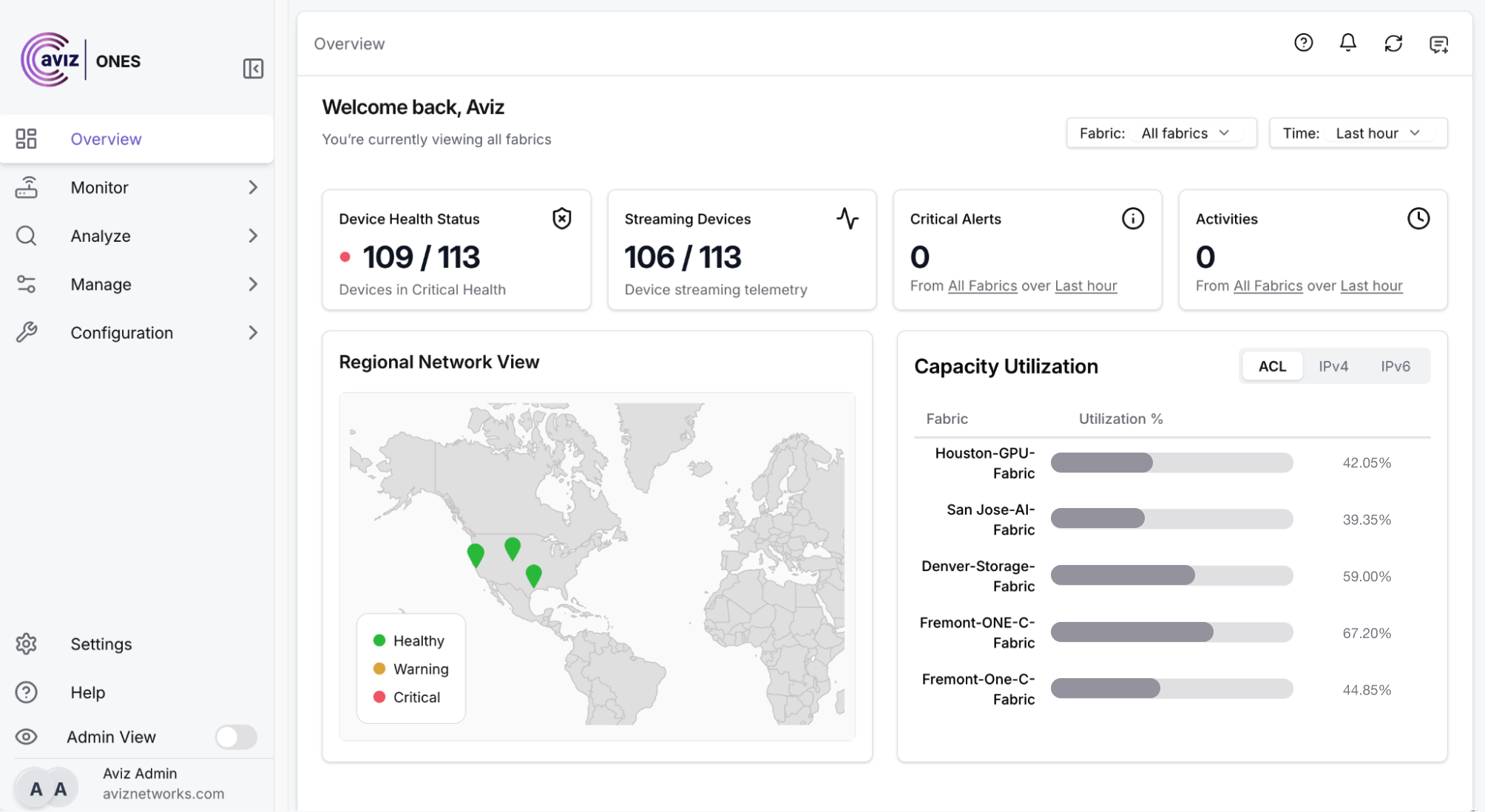
In the image below, you can see the ONES dashboard where you can manage your entire SONiC-based network built on any supported network devices. Notice that ONES allows you to manage, configure, and even monitor the entire environment from a single interface including advanced configurations such as BGP and VXLAN.
The Intelligence Layer
ONES transforms SONiC into a production-ready solution. It introduces automation frameworks and lifecycle management features that enterprises need to operate at scale. Its machine learning pipelines continuously analyze telemetry inputs, detecting anomalies such as microbursts or subtle packet loss long before they impact services. ONES can trigger self-healing automation, reroute traffic, or roll back configurations automatically. This reduces the mean time to resolution and brings hyperscaler-grade resiliency to enterprise networks.
ONES also integrates seamlessly with NetDevOps pipelines. It supports declarative workflows through Ansible and Terraform, enabling programmatic networking where policy objectives are translated directly into device configurations. Lifecycle management features automate OS upgrades, configuration rollbacks, and validation tests, minimizing downtime and human error. Security and governance are built in, with role-based access control, AAA, and audit logs ensuring compliance.
In practice, ONES puts SONiC in reach as a practical and powerful way for any enterprise to leverage open networking, something previously available only to the most technologically progressive and resource-rich organizations. It provides the management, automation, and visibility enterprises need to operate open networks confidently.
Lower Costs with Whitebox plus ONES
The combination of SONiC and ONES delivers dramatic cost savings. Whitebox switches running SONiC are typically far cheaper than proprietary alternatives. ONES provides the granular control to manage them effectively. Therefore, used together, they reduce both capital and operational expenditures.
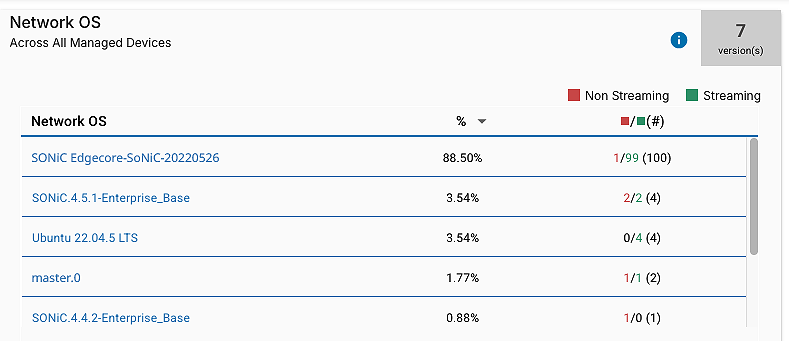
In the next image, notice that you can manage, monitor, and analyze our network according to which version of SONiC you’re running.
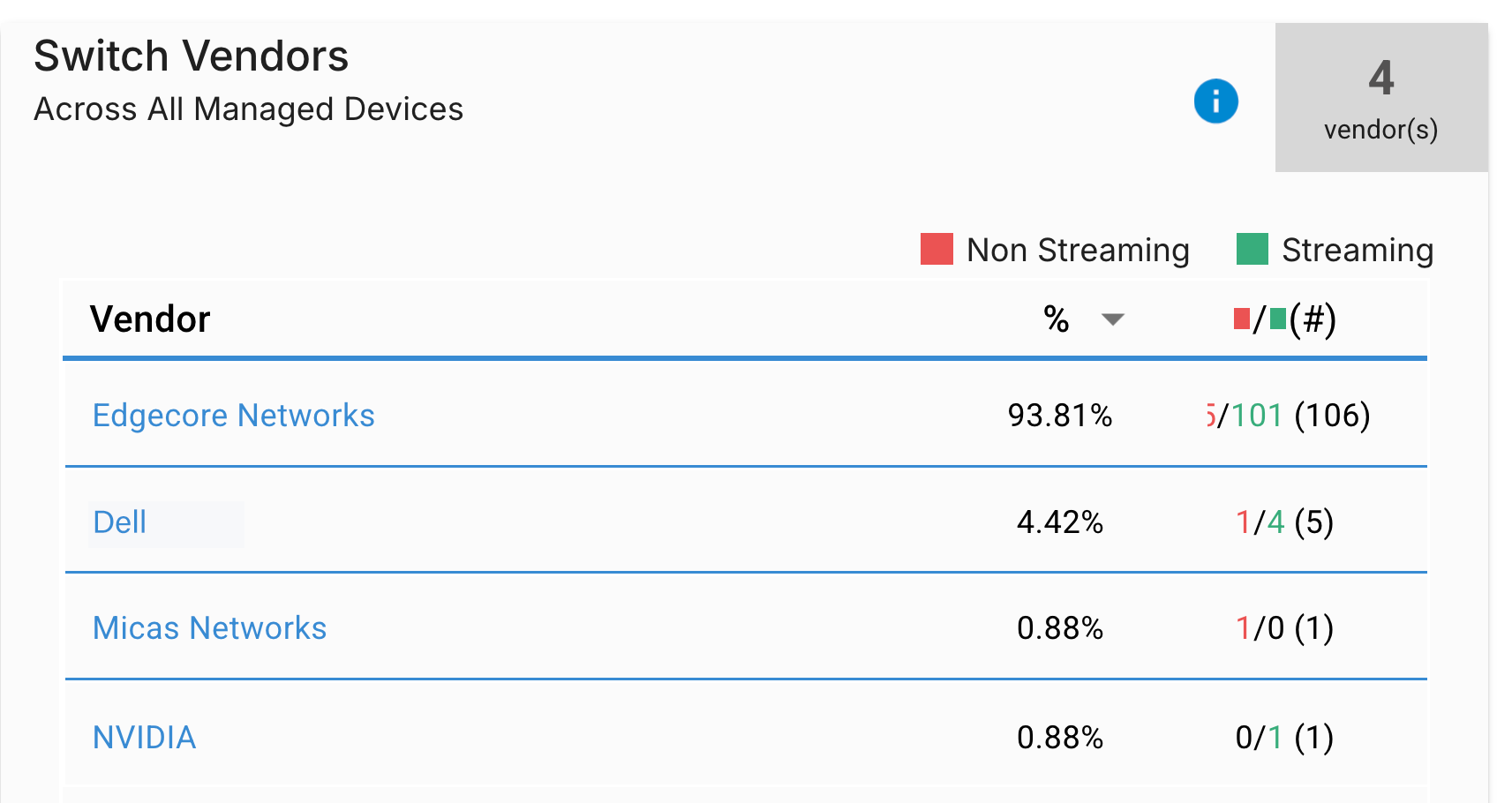
You can also do the same by filtering for switch manufacturer.
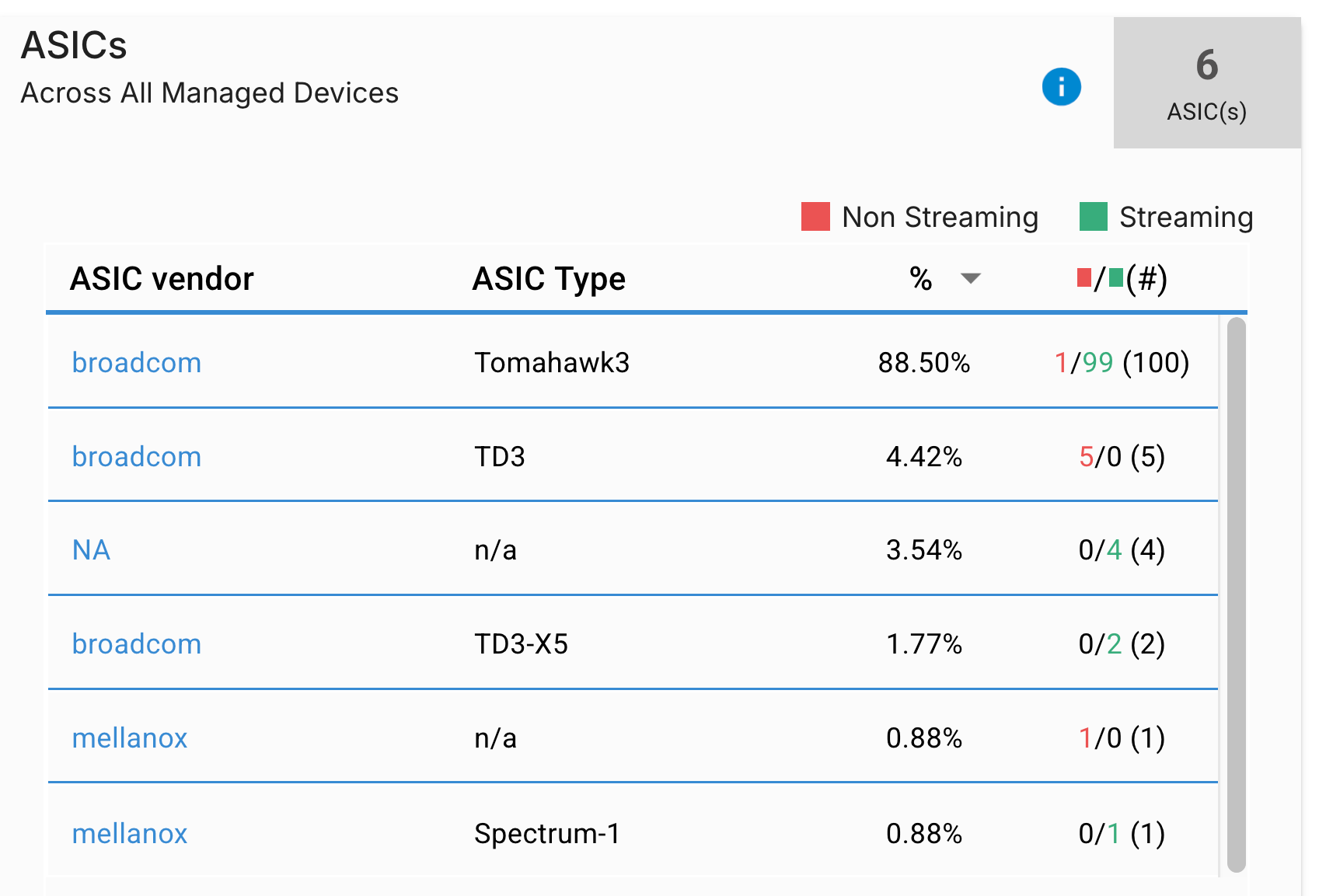
And lastly, you can even filter and manage your SONiC environment according to the specific ASIC deployed in your managed devices.
Moreover, the total cost of ownership improves not only because hardware is cheaper, but also because automation reduces downtime and manual troubleshooting. Enterprises can achieve hyperscaler-grade efficiency by using automation baked into the ONES platform. For network operators, this means simplified workflows, faster troubleshooting, and future-proof skills in open networking.
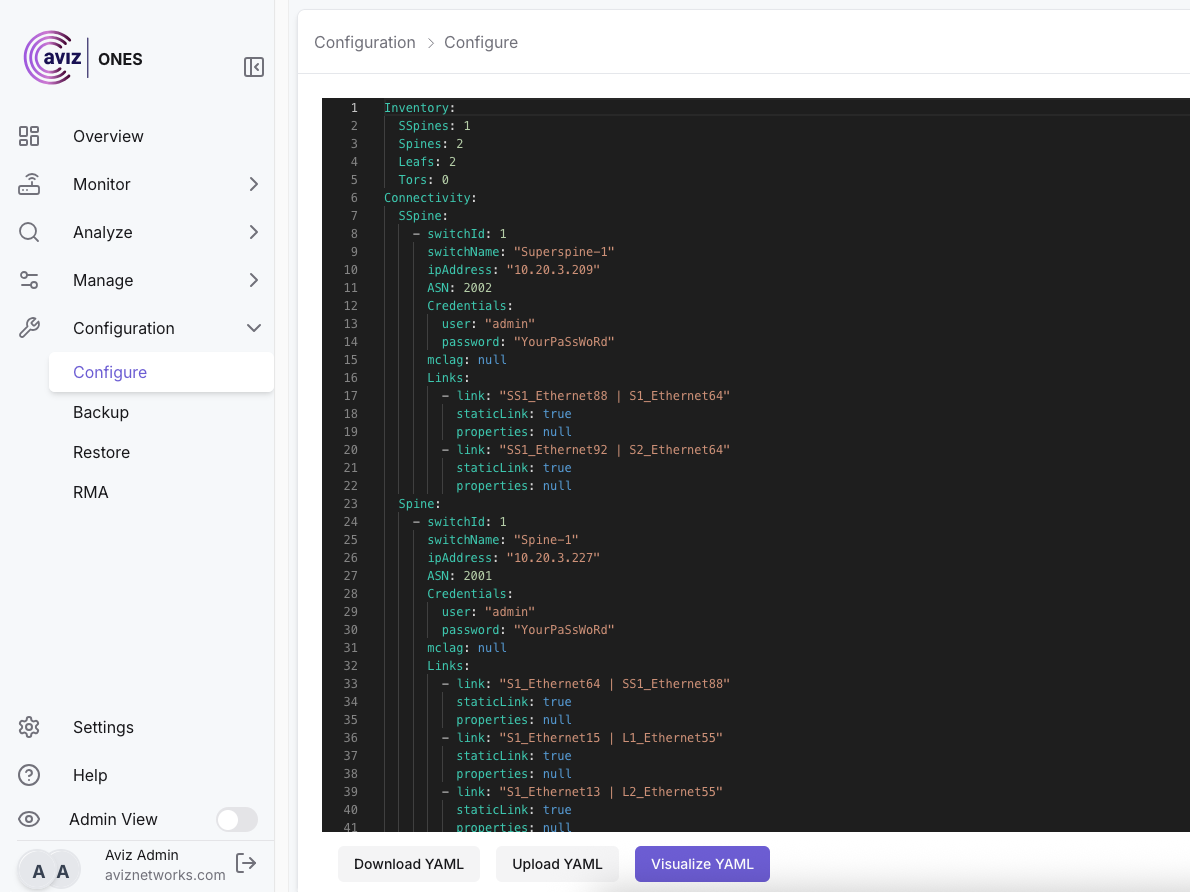
In the graphic below, notice that we can manage our devices through a simple GUI, or we can take advantage of programmatic management through YAML files integrated into your NetDevOps workflows.
Unified Support through Partnerships
A critical differentiator for Aviz is its direct partnerships with hardware vendors such as NVIDIA, Cisco, and Broadcom. These collaborations ensure SONiC runs optimally across diverse silicon platforms and that ONES integrates seamlessly with vendor APIs.
For customers, this means unified support.
Aviz’s professional services and technical assistance center can address both software and hardware issues, eliminating the traditional finger-pointing between vendors. This holistic support model accelerates adoption and reduces risk, giving enterprises a trusted partner for their open networking journey.
The Future of Networking is Open
SONiC represents the future of networking: open, programmable, and vendor-neutral. ONES elevates SONiC into a production-ready platform with automation, observability, and lifecycle management, enabling enterprises the ability to deploy whitebox switches at scale, reduce costs, and achieve hyperscaler-grade efficiency.
For network operators, SONiC and ONES simplify operations, accelerate troubleshooting, and future-proof skills. For enterprises, it improves the total cost of ownership while delivering flexibility and resilience. And with Aviz’s direct partnerships with hardware vendors, organizations gain unified support across both software and hardware.
The networking world is shifting from proprietary silos to open ecosystems. The future of networking is open, intelligent, and automated, and Aviz Networks is helping enterprises embrace it today.